


Ocean Exploration Facts
The ocean exploration facts in this section provide short answers to common or intriguing ocean questions. The questions are organized in a series of categories; click on a category to learn more about these topics.
For many ocean exploration facts, content has been repurposed from essays posted elsewhere on the website; to access the original content, click on links available on individual ocean fact pages.

Disturbances such as waves caused by strong hurricane winds do not reach the deep ocean; however, churning of surface waters can result in more food falling to the seafloor

The tools used to locate underwater archaeological sites are essentially the same tools used to explore the seafloor.

NOAA uses “telepresence” technology to deliver data and video in real time from ships such as NOAA Ship Okeanos Explorer to scientists, teachers, students, and members of the general public on shore.
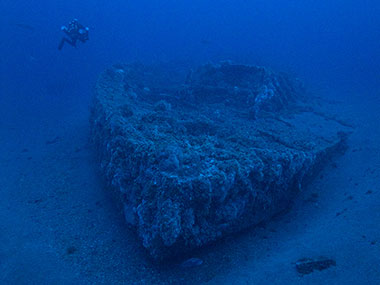
The USS Monitor was the Union Navy's first ironclad warship during the American Civil War; it sunk in 1862 off the coast of North Carolina and became the site of our nation's first national marine sanctuary in 1975.
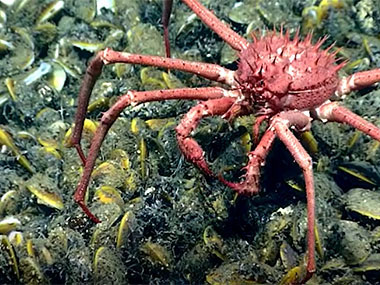
Photosynthesis and chemosynthesis are both processes by which organisms produce food; photosynthesis is powered by sunlight while chemosynthesis runs on chemical energy.
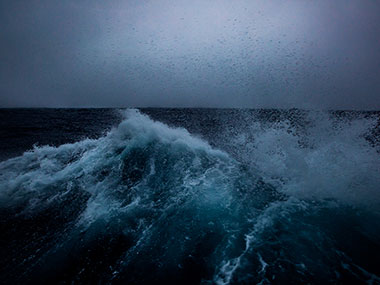
Waves are caused by energy passing through the water, causing the water to move in a circular motion.

The impacts of pressure at ocean depth are less for organisms lacking gas-filled spaces like lungs or swim bladders.

The water column is the largest, yet one of the most underexplored, habitats on the planet; we explore it to better understand the ocean as a whole, including the huge biomass that lives there and its importance to the global carbon and other biogeochemical cycles.

There are three kinds of plate tectonic boundaries: divergent, convergent, and transform plate boundaries.

Hurricanes form over tropical oceans, where warm water and air interact to create these storms.